CompareMedsRx - Platform Overhaul
live project
Information Architecture
HubSpot CMS
web Design
B2B2C
live project
Product Design
Information Architecture
HubSpot CMS
task
Led a full redesign of the CompareMedsRx website on HubSpot CMS, transforming a fragmented set of pages into a cohesive, scalable platform. The work focused on restructuring information architecture, modernizing the visual system, and creating clearer pathways between search, services, and educational content.
This case study covers the marketing platform redesign. The prescription search engine web app is a separate case study.
TL;DR (Project Overview)
strategic impact
60k → 290k
users scaled during redesign
40+ Partners
served by one co-branded landing page system
6 week E2E Deployment
6 week E2E Deployment
from initial planning to final site launch
6 week E2E Deployment
from initial planning to final site launch
Heuristic-Led Design
relied on established UX patterns to mitigate limited access to external testers
Concurrent Learning
mastered HubSpot’s module system in parallel with the build
sole designer
sole lead for all UX, visual, and CMS implementation
design constraints
Heuristic-Led Design
relied on established UX patterns to mitigate limited access to external testers
Concurrent Learning
mastered HubSpot’s module system in parallel with the build
sole designer
sole lead for all UX, visual, and CMS implementation
strategic impact
60k → 290k
users scaled during redesign
40+ Partners
served by one co-branded landing page system
6 week E2E Deployment
from initial planning to final site launch
Heuristic-Led Design
relied on established UX patterns to mitigate limited access to external testers
Concurrent Learning
mastered HubSpot’s module system in parallel with the build
sole designer
sole lead for all UX, visual, and CMS implementation
design constraints
context
About CompareMedsRx
CompareMedsRx helps people find the lowest cash price on prescriptions by comparing 20+ discount cards and 70,000+ pharmacies. The company is also offered to employers & PEOs as a healthcare benefit for their members, sometimes through co-branded experiences built specifically for their audience.
That meant the redesign wasn't just a marketing site refresh. It had to work as a B2B2C platform: clear enough for a first-time visitor to understand and act on, flexible enough for partners to feel like they were getting their own surface, and structured enough that we could keep adding service lines (test kits, subscription services, etc) without the system breaking.
three design decisions
Decision #1: Single search anchor over multiple CTAs
1
2
3
1
2
3
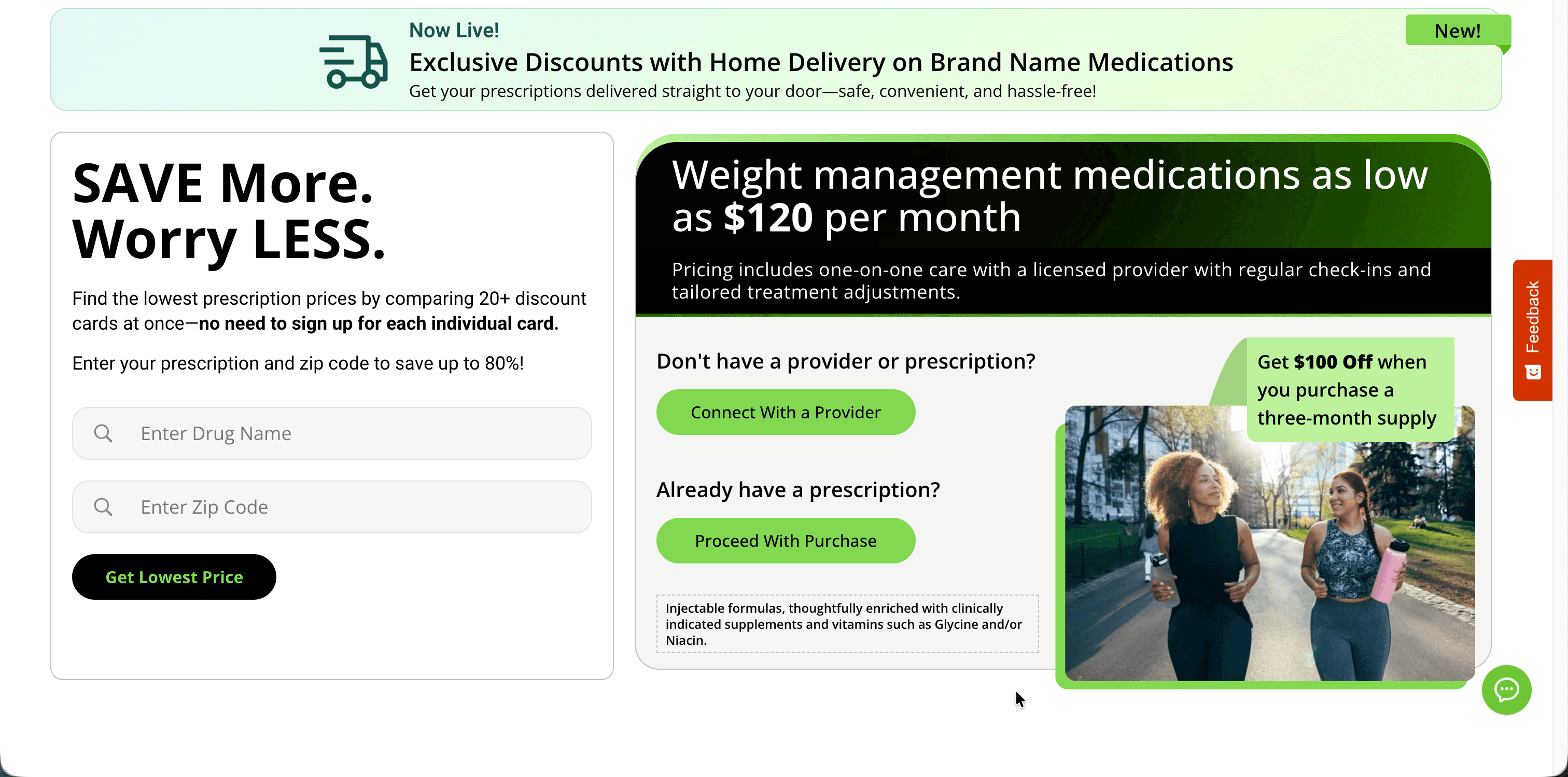
Home Page: Three issues kept showing up in feedback and user behavior:
Home Page: Three issues kept showing up in feedback and user behavior:
1. Three competing CTAs above the fold:
"Get Lowest Price," "Connect With a Provider," and "Proceed With Purchase" all asked for attention at once. New visitors didn't know which path was for them.
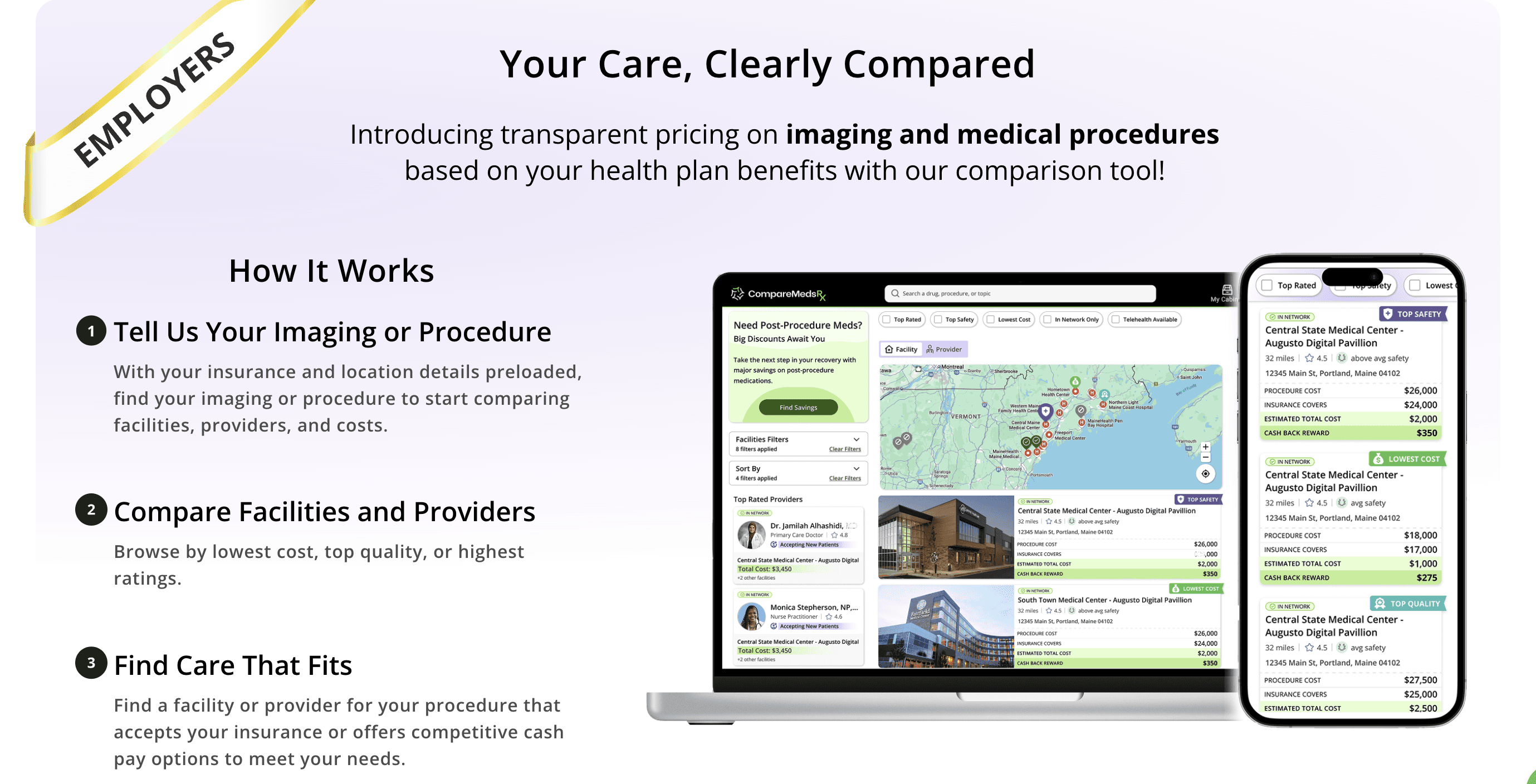
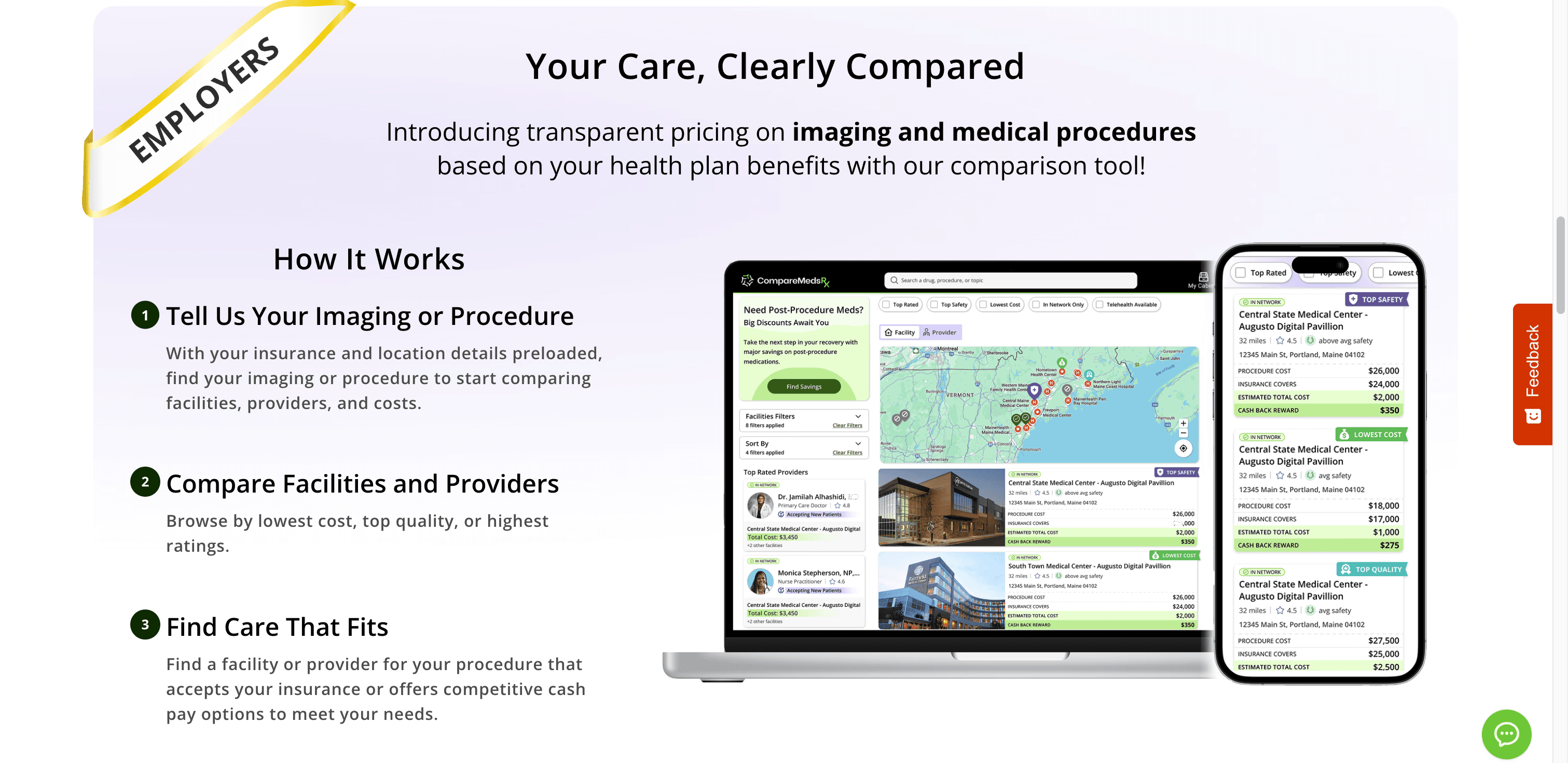
2. Inconsistent visual systems by section:
Purple for procedures, dark green for weight management, a banner-ribbon graphic for employers, and mismatched card treatments throughout. Every section looked like a different product.
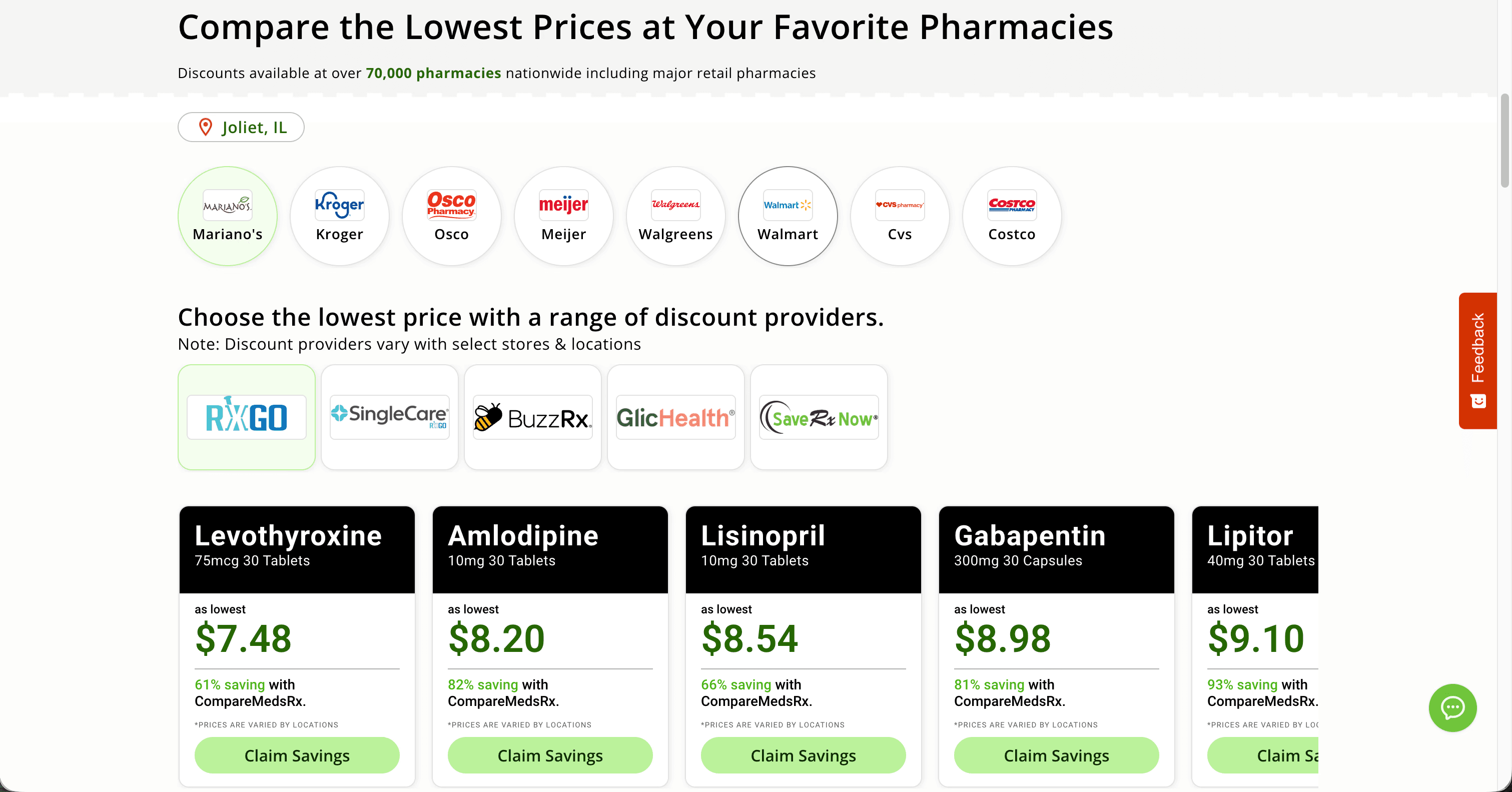
3. Fragmented Discount Architecture:
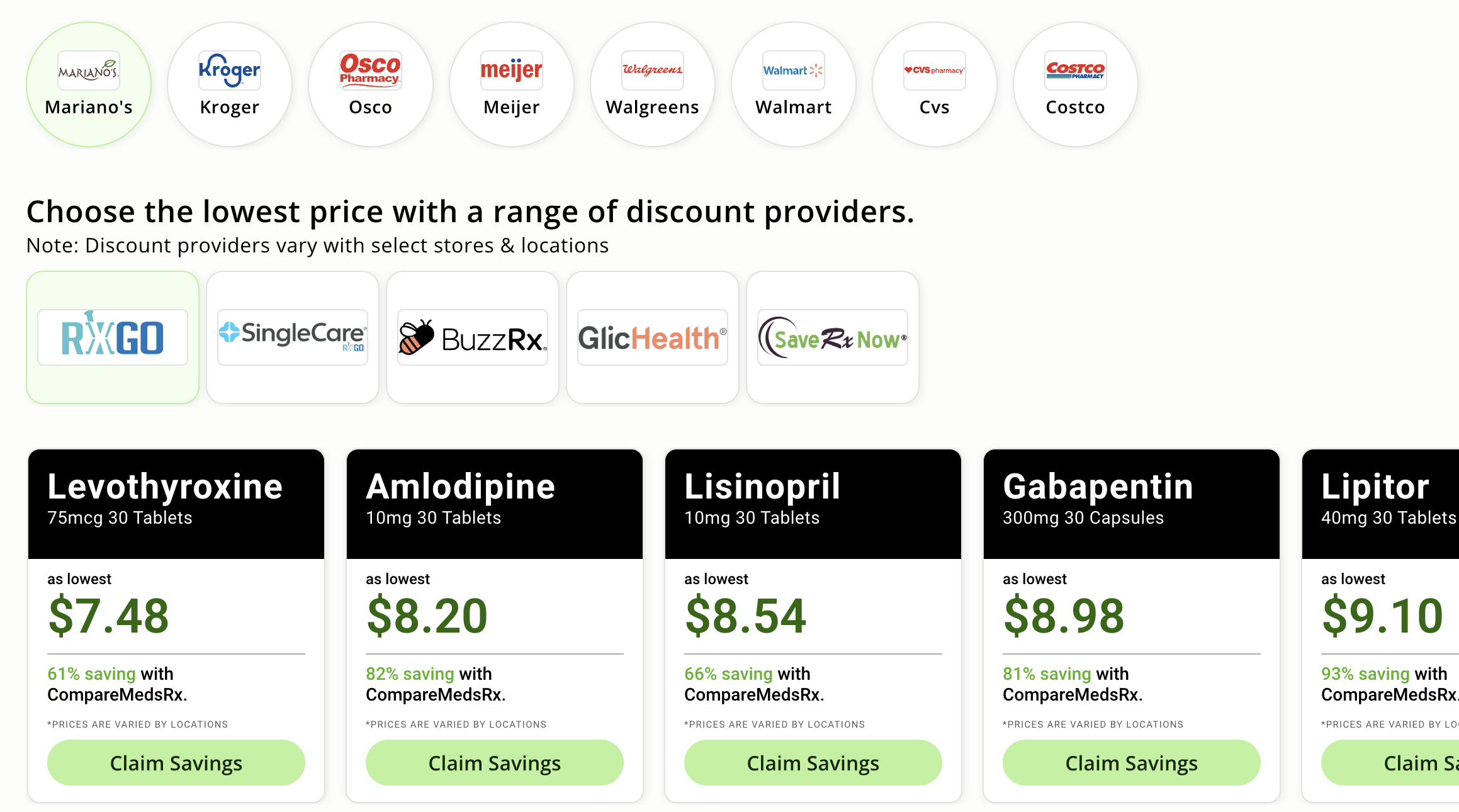
Users are forced to mentally "connect the dots" between pharmacy logos, discount providers, and price cards to justify the savings shown.
Three competing CTAs above the fold:
"Get Lowest Price," "Connect With a Provider," and "Proceed With Purchase" all asked for attention at once. New visitors didn't know which path was for them.
Inconsistent visual systems by section:
Purple for procedures, dark green for weight management, a banner-ribbon graphic for employers, and mismatched card treatments throughout. Every section looked like a different product.
Fragmented Discount Architecture:
Users are forced to mentally "connect the dots" between pharmacy logos, discount providers, and price cards to justify the savings shown.
Home Page: Three issues kept showing up in feedback and user behavior:
1. Three competing CTAs above the fold:
"Get Lowest Price," "Connect With a Provider," and "Proceed With Purchase" all asked for attention at once. New visitors didn't know which path was for them.
2. Inconsistent visual systems by section:
Purple for procedures, dark green for weight management, a banner-ribbon graphic for employers, and mismatched card treatments throughout. Every section looked like a different product.
3. Fragmented Discount Architecture:
Users are forced to mentally "connect the dots" between pharmacy logos, discount providers, and price cards to justify the savings shown.
Decision #2: IA restructured around user intent
The navigation now mirrors what users need, not how the company describes itself.
The navigation now mirrors what users need, not how the company describes itself.
The navigation now mirrors what users need, not how the company describes itself.
BEFORE
3 top-level service labels
Home
Save on Healthcare
1
Prescription savings
· Search Prescriptions
· Save on GLP-1s
imaging & procedures
· Imaging & Procedure Savings
lab tests
2
· Genetic Testing for Weight Mgmt
· Methylation Function Test
· PharmaGene Function Test
· Male Fertility Testing
· Gut Microbiome Testing
Who We Are
3
· About Us
· Blog & Media
· Our Partners
· Who We Serve
Contact
4
after
4 service-named top-level items
Prescription Savings
1
· Search Medications
· Save on GLP-1s
Health Tests & Insights
2
prevent & detect
· Male Fertility
· Multi-Cancer Detection
Optimize
Gut Microbiome
Mental Health
3
AI Mental Health Coaching
Resources
4
· About Us
· Blog
· Our Partners
· Contact & FAQs
BEFORE
3 top-level service labels
Home
Save on Healthcare
1
Prescription savings
· Search Prescriptions
· Save on GLP-1s
imaging & procedures
· Imaging & Procedure Savings
lab tests
2
· Genetic Testing for Weight Mgmt
· Methylation Function Test
· PharmaGene Function Test
· Male Fertility Testing
· Gut Microbiome Testing
Who We Are
3
· About Us
· Blog & Media
· Our Partners
· Who We Serve
Contact
4
after
4 service-named top-level items
Prescription Savings
1
· Search Medications
· Save on GLP-1s
Health Tests & Insights
2
prevent & detect
· Male Fertility
· Multi-Cancer Detection
Optimize
Gut Microbiome
Mental Health
3
AI Mental Health Coaching
Resources
4
· About Us
· Blog
· Our Partners
· Contact & FAQs
BEFORE
3 top-level service labels
Home
Save on Healthcare
1
Prescription savings
· Search Prescriptions
· Save on GLP-1s
imaging & procedures
· Imaging & Procedure Savings
lab tests
2
· Genetic Testing for Weight Mgmt
· Methylation Function Test
· PharmaGene Function Test
· Male Fertility Testing
· Gut Microbiome Testing
Who We Are
3
· About Us
· Blog & Media
· Our Partners
· Who We Serve
Contact
4
after
4 service-named top-level items
Prescription Savings
1
· Search Medications
· Save on GLP-1s
Health Tests & Insights
2
prevent & detect
· Male Fertility
· Multi-Cancer Detection
Optimize
Gut Microbiome
Mental Health
3
AI Mental Health Coaching
Resources
4
· About Us
· Blog
· Our Partners
· Contact & FAQs
BEFORE
3 top-level service labels
Home
Save on Healthcare
1
Prescription savings
· Search Prescriptions
· Save on GLP-1s
imaging & procedures
· Imaging & Procedure Savings
lab tests
2
· Genetic Testing for Weight Mgmt
· Methylation Function Test
· PharmaGene Function Test
· Male Fertility Testing
· Gut Microbiome Testing
Who We Are
3
· About Us
· Blog & Media
· Our Partners
· Who We Serve
Contact
4
after
4 service-named top-level items
Prescription Savings
1
· Search Medications
· Save on GLP-1s
Health Tests & Insights
2
prevent & detect
· Male Fertility
· Multi-Cancer Detection
Optimize
Gut Microbiome
Mental Health
3
AI Mental Health Coaching
Resources
4
· About Us
· Blog
· Our Partners
· Contact & FAQs
1
Vague label hides 3 distinct service categories
Vague label hides 3 distinct service categories
→
→
1
All prescription tools consolidated; GLP-1s included since they require a prescription
All prescription tools consolidated; GLP-1s included since they require a prescription
2
Lab tests buried 3 levels deep under vague parent
Lab tests buried 3 levels deep under vague parent
→
→
2
Lab tests elevated to top-level, sub-categorized by user intent: Prevent & Detect vs Optimize
Lab tests elevated to top-level, sub-categorized by user intent: Prevent & Detect vs Optimize
3
Company + resource pages hidden under identity label
Company + resource pages hidden under identity label
→
→
3
Mental Health added as a dedicated category -previously unreachable from the nav entirely
Mental Health added as a dedicated category -previously unreachable from the nav entirely
4
Contact as standalone wastes prime nav real estate
Contact as standalone wastes prime nav real estate
→
→
4
Who We Are + Contact merged into Resources, freeing prime nav space for service categories
Who We Are + Contact merged into Resources, freeing prime nav space for service categories
1
Vague label hides 3 distinct service categories
→
1
All prescription tools consolidated; GLP-1s included since they require a prescription
2
Lab tests buried 3 levels deep under vague parent
→
2
Lab tests elevated to top-level, sub-categorized by user intent: Prevent & Detect vs Optimize
3
Company + resource pages hidden under identity label
→
3
Mental Health added as a dedicated category -previously unreachable from the nav entirely
4
Contact as standalone wastes prime nav real estate
→
4
Who We Are + Contact merged into Resources, freeing prime nav space for service categories
Decision #3: Module-based system for partner scale
Constraining to HubSpot modules made partner pages a configuration job, not a design job.
Constraining to HubSpot modules made partner pages a configuration job, not a design job.
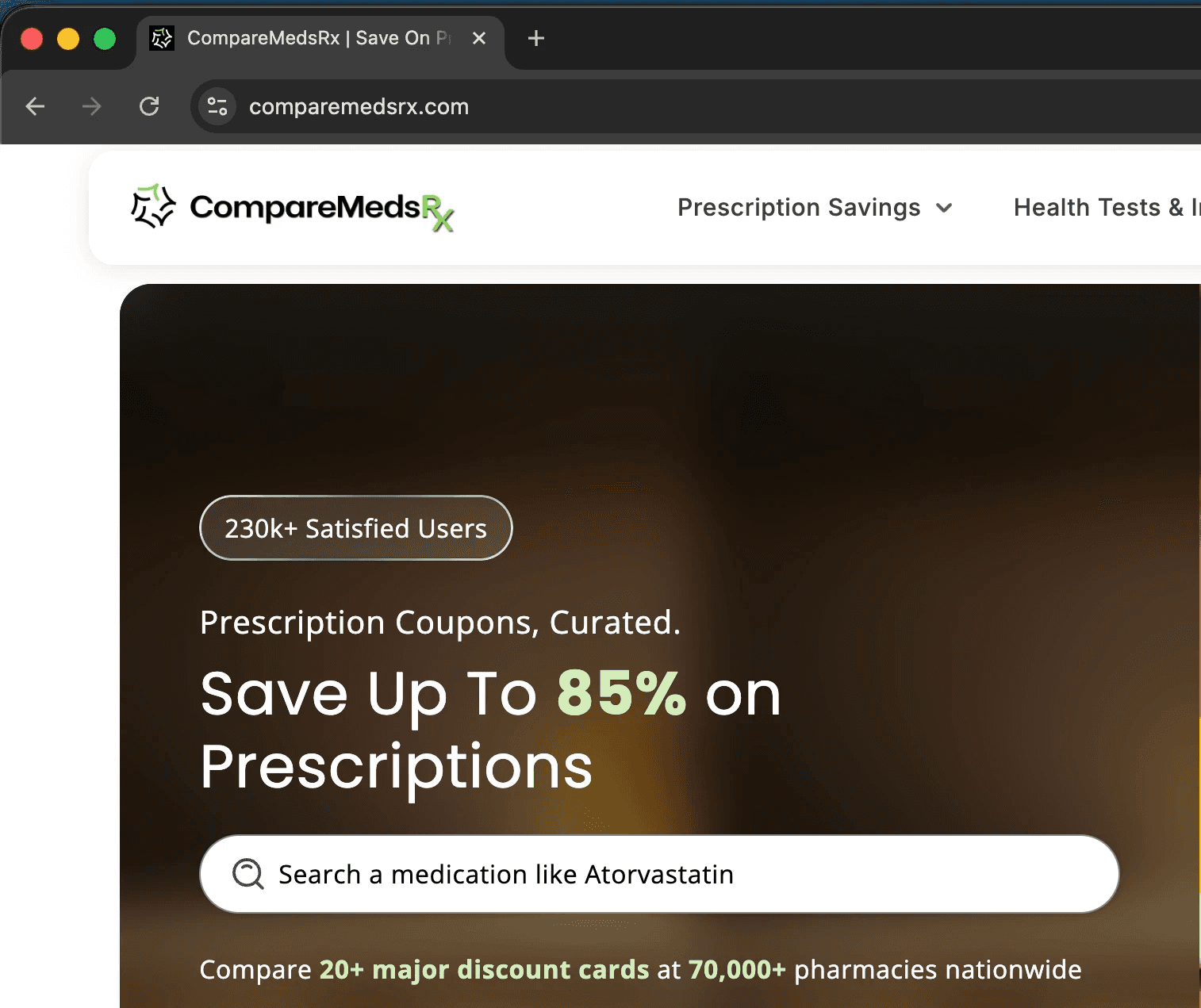
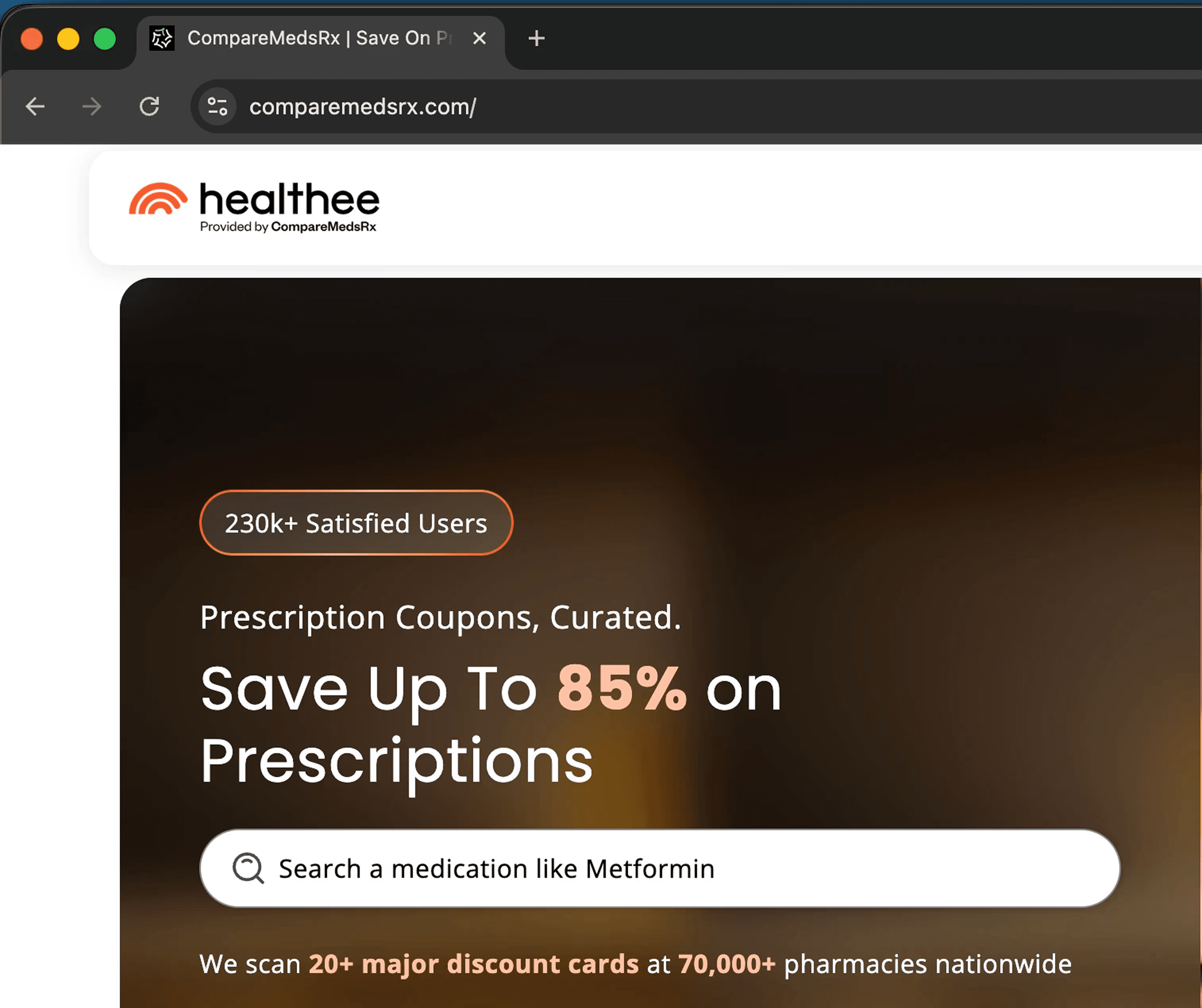
I own the partner page configuration in HubSpot end-to-end, so when a new partnership goes live, the brand stays on-system.
Because partner pages are core to how the business grows, I designed the system so a co-branded page could be spun up by swapping a few variables, not by rebuilding components.
I own the partner page configuration in HubSpot end-to-end, so when a new partnership goes live, the brand stays on-system.
Because partner pages are core to how the business grows, I designed the system so a co-branded page could be spun up by swapping a few variables, not by rebuilding components.
Aa
Poppins
Aa
Open Sans
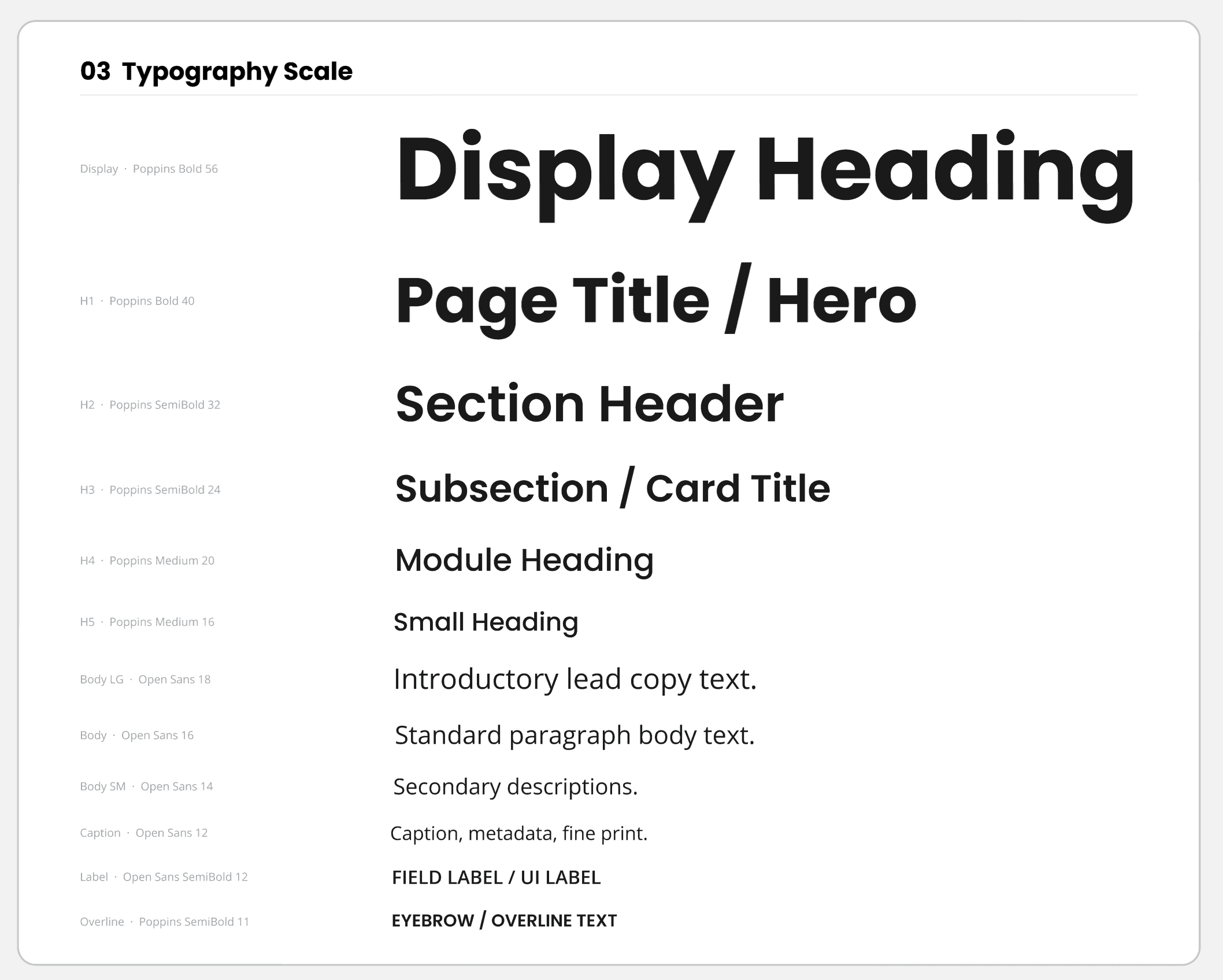
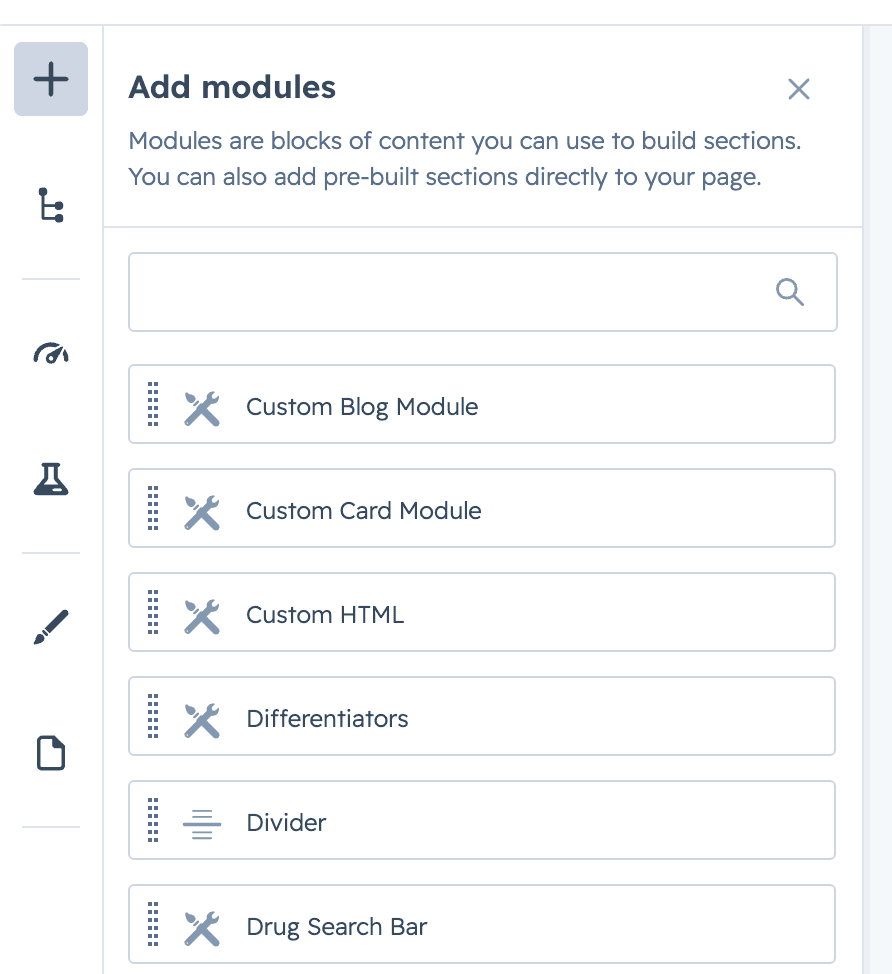
I leaned into the constraint of designing components that could be reordered freely on a page rather than fighting the platform with custom layouts.
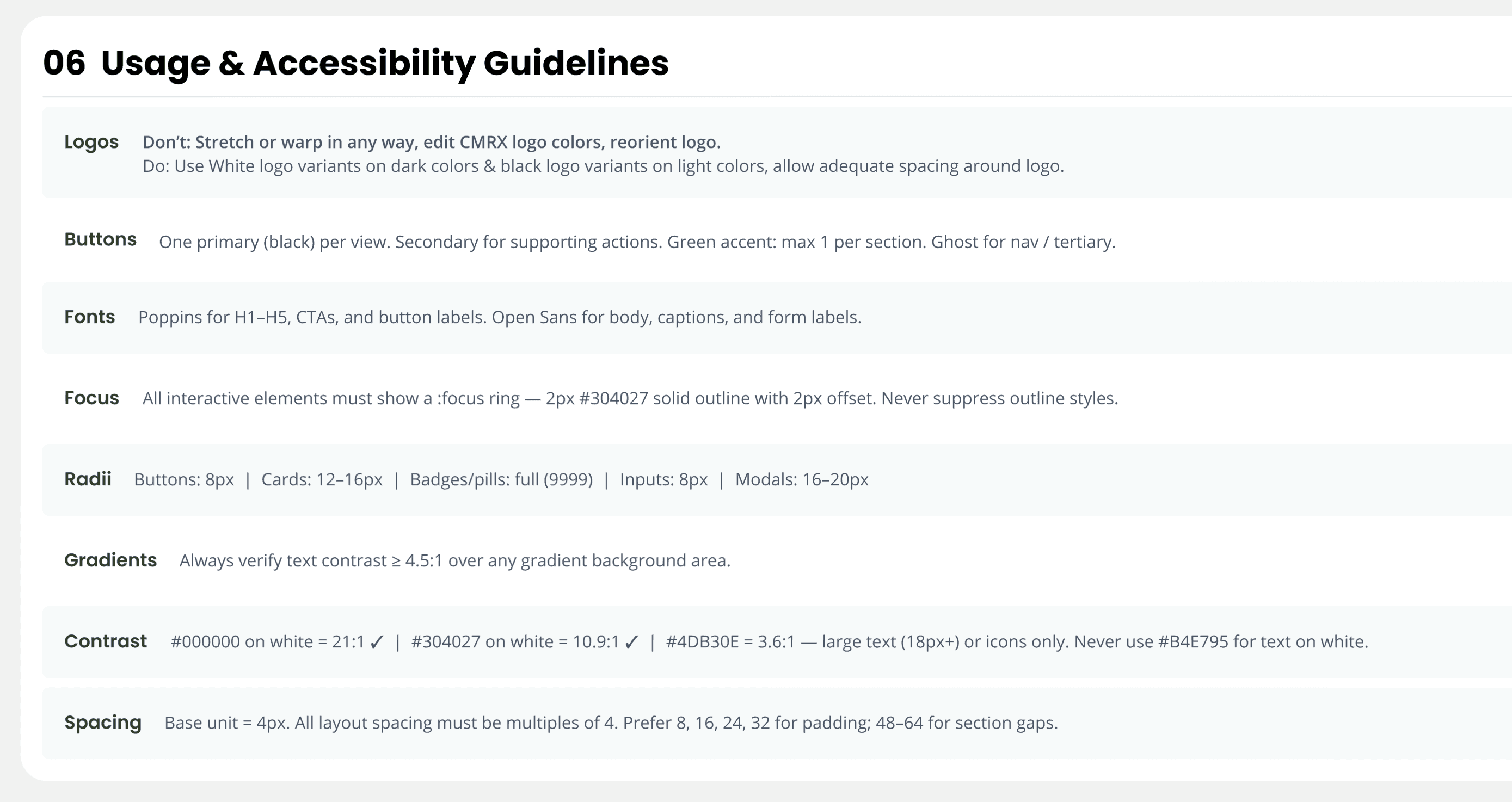
I built the design system around a small set of HubSpot-friendly modules, so every page on the site (and every co-branded partner page) would feel like the same product.
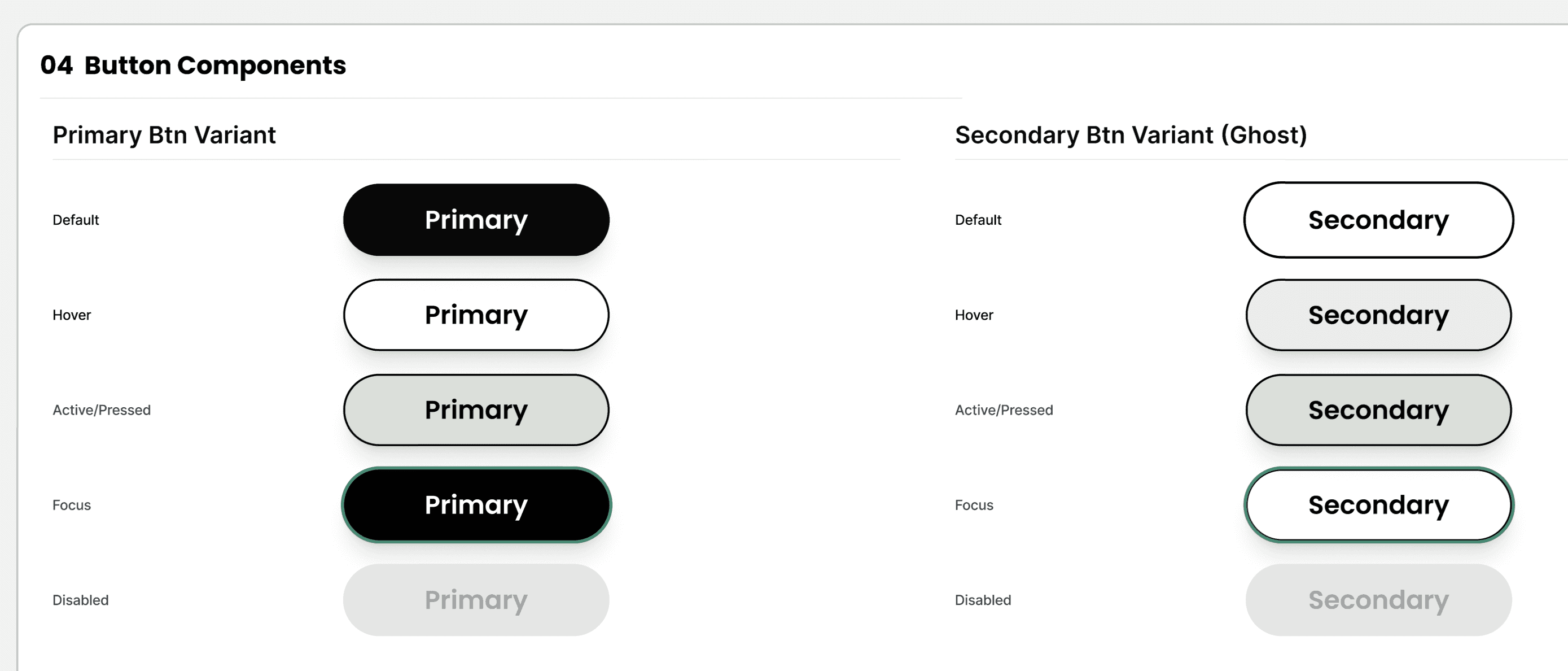
Aa
Poppins
Aa
Open Sans
I built the design system around a small set of HubSpot-friendly modules, so every page on the site (and every co-branded partner page) would feel like the same product.
I leaned into the constraint of designing components that could be reordered freely on a page rather than fighting the platform with custom layouts.
Aa
Poppins
Aa
Open Sans
I leaned into the constraint of designing components that could be reordered freely on a page rather than fighting the platform with custom layouts.
I built the design system around a small set of HubSpot-friendly modules, so every page on the site (and every co-branded partner page) would feel like the same product.
Decision #3: Module-based system for partner scale
Constraining to HubSpot modules made partner pages a configuration job, not a design job.
I own the partner page configuration in HubSpot end-to-end, so when a new partnership goes live, the brand stays on-system.
Because partner pages are core to how the business grows, I designed the system so a co-branded page could be spun up by swapping a few variables, not by rebuilding components.
Aa
Poppins
Aa
Open Sans
I built the design system around a small set of HubSpot-friendly modules, so every page on the site (and every co-branded partner page) would feel like the same product.
I leaned into the constraint of designing components that could be reordered freely on a page rather than fighting the platform with custom layouts.
three design decisions
Decision #1: Single search anchor over multiple CTAs
Home Page: Three issues kept showing up in feedback and user behavior:
1. Three competing CTAs above the fold:
"Get Lowest Price," "Connect With a Provider," and "Proceed With Purchase" all asked for attention at once. New visitors didn't know which path was for them.
2. Inconsistent visual systems by section:
Purple for procedures, dark green for weight management, a banner-ribbon graphic for employers, and mismatched card treatments throughout. Every section looked like a different product.
3. Fragmented Discount Architecture:
Users are forced to mentally "connect the dots" between pharmacy logos, discount providers, and price cards to justify the savings shown.
impact
Driving Measurable Growth
Driving Measurable Growth
→
users scaled during & after the redesign
Pre-seed capital secured
Brand and platform credibility contributed to closing the company's first funding round
New partnerships signed
Brand cited directly as reason for signing on
Mobile app foundation set
Fall 2026 launch lands on a credible web platform
→
users scaled during & after the redesign
New partnerships signed
Brand cited directly as reason for signing on
Pre-seed capital secured
Brand and platform credibility contributed to closing the company's first funding round
Mobile app foundation set
Fall 2026 launch lands on a credible web platform
design outcome
From Site to System
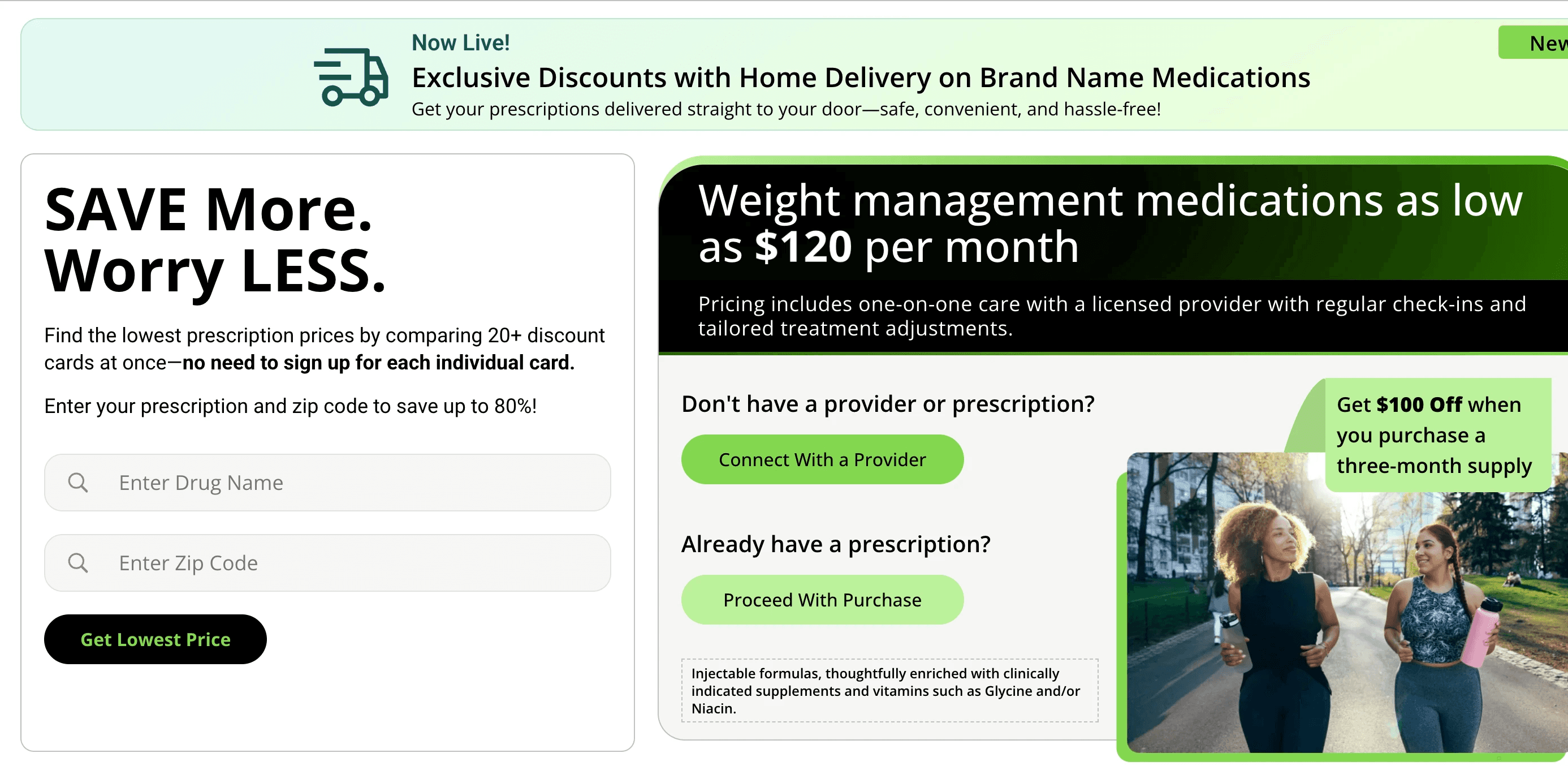
Single search anchor: Every visitor now enters the same high-intent funnel of finding and comparing medications instead of choosing between disconnected paths at the door.
Single search anchor: Every visitor now enters the same high-intent funnel of finding and comparing medications instead of choosing between disconnected paths at the door.
Single search anchor: Every visitor now enters the same high-intent funnel of finding and comparing medications instead of choosing between disconnected paths at the door.
For the full experience with auto-playing walkthroughs, view on desktop.
Single search anchor: Every visitor now enters the same high-intent funnel of finding and comparing medications instead of choosing between disconnected paths at the door.
impact
Driving Measurable Growth
users scaled during & after the redesign
→
New partnerships signed
Brand cited directly as reason for signing on
Pre-seed capital secured
Brand and platform credibility contributed to closing the company's first funding round
Mobile app foundation set
Fall 2026 launch lands on a credible web platform
This case study covers the marketing platform redesign. The prescription search engine web app is a separate case study.